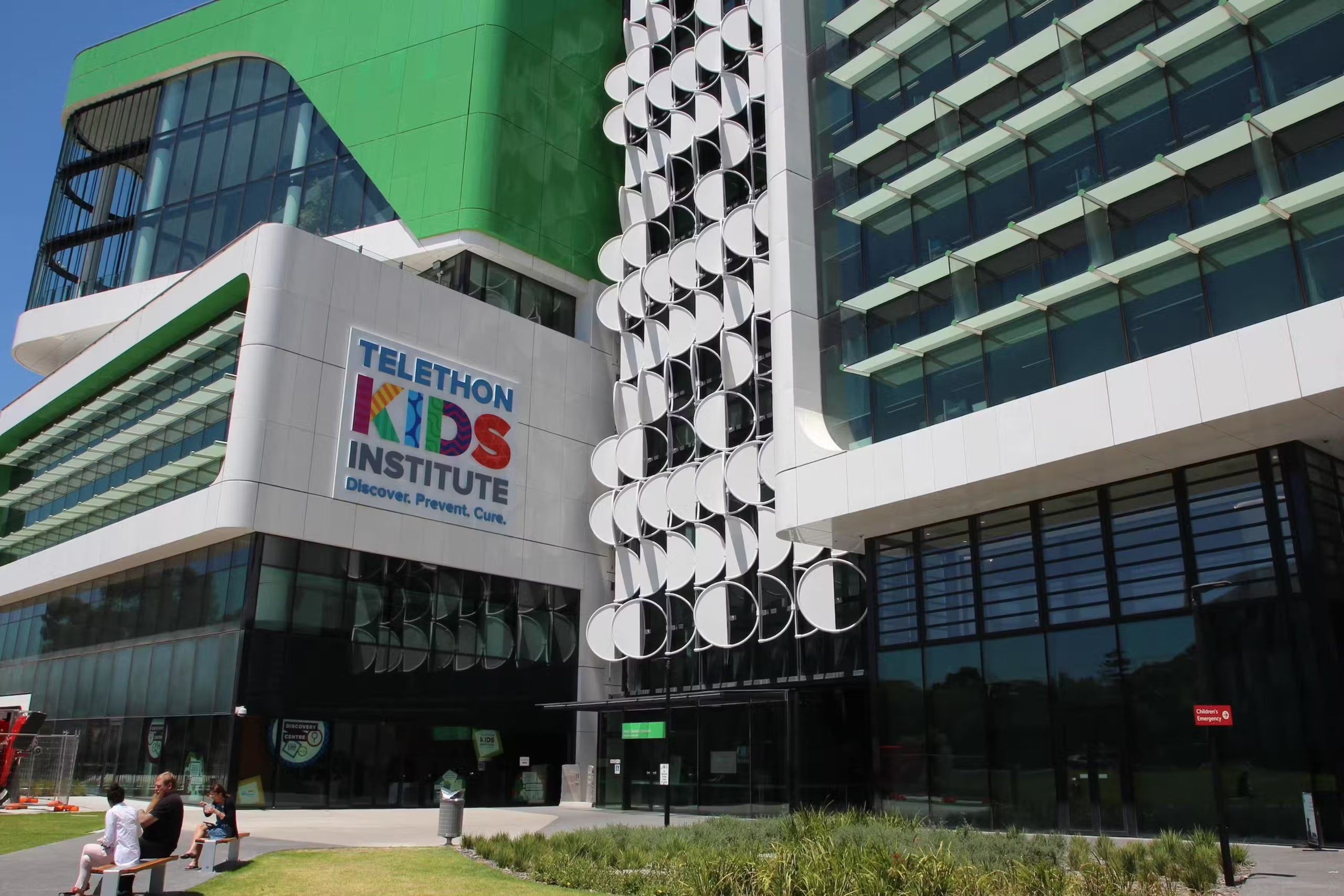
Throughout the project there were various challenges which we had to overcome: For the project Firesafe were responsible for the coordination of all the fire protection installations. This involved us working with all the other services and trades as required during the design, install and final handover stages of the project to meet our project completion targets.
Wall Wetting Sprinklers
With the requirement for this project to have wall wetting sprinklers to the glazed Atrium façade for the East and West buildings to prevent fire from breaking out of a floor level into the Atrium, a design had to be engineered to allow for 3 separate criteria to compliment the architectural ascetic appeal of the project. Firstly the design had to conform to the Fire Engineered criteria providing the correct flow and pressure of water onto the glazed panels. This was achieved by the use of a software program called Hyena which is used to carry out full hydraulic calculations and will provide the correct amount of water as dictated by the consultant’s specification and Australian Standards.
Specialised Sprinkler Heads
Due to specific client requests Firesafe were required to install under duct sprinkler protection within all plant areas. Firesafe also provided sprinkler guards to all sprinklers within the interstitial spaces above Bio Resources to suit the pressure / containment requirements of the space. Dry drop sprinklers were fitted to the rooms with thermal sensitivity – for example the cool rooms and freezer rooms within the laboratories.
Upgrade to Smoke Control Systems
This project required upgrades to fire rated compartments to suit laboratories and areas of floors/slabs that had been removed to allow for installation of stairs between floors which then required upgraded to the existing Fire Smoke Control System. To achieve compliance and the correct air flows in fire mode, many additional fire and smoke dampers were installed. Balancing of these systems proved to be difficult but after many late nights of testing after hours the required results were achieved and approved by the Fire Engineer.
Containment Compliance PC2 and BC2 (Physical Containment Level 2 and Biosecurity Containment Level 2)
This requirement required an extreme amount of planning and design to ensure the highest quality of installation was achieved by taking care and having a high level of quality assurance checks in place.
Due to the nature of the laboratories we had to make sure that all service penetrations were sealed to a 250-micron quality and all cables and pipes penetrating in to these areas were sealed at more than two locations. All cables installed in the laboratories ran through several glands before they entered a custom stainless steel service plate located on walls/ceilings and exiting in a specialized heat shrink containing a sealed glue before running into the medical duct on the ceiling.
All pipe works and devices were also required to be sealed at all fixing points and maintain a 50mm clearance between wall, ceilings or other devices to enable cleaning between services. Many meetings were held with the clients and specialists from around Australia to ensure everyone involved in this project had an understanding of the requirements of the following standards:
- AS/NZS 2243 Safety In Laboratories – Part 3: Microbiological Safety & Containment (2010)
- AS/NZS 2982 Laboratory Design & Construction (2010)
- AS 2252 Part 4 as it relates to installation & use of Class II BSCs (biological safety cabinets)
- DAWR Criteria for BC2 facilities
Due to the high level of planning, design, installation and quality assurance checks this laboratory was in the 10% of laboratories that pass first time round in all of Australia.
Working on a System that was not 100% Handed Over to the Client
Due to delayed project completion of the base build of the Dry Fire system (by other contractors) Firesafe were required to work in with other contractors for the TKI Fit Out to maintain warranties as well as keeping the system live and protected in construction areas for insurance purposes. Again many meetings were held between Firesafe and the base build contractor to ensure we all worked together. Training and procedures were carried out with site personal for isolation protocols to maintain a live system. All programming changes and upgrades for the Dry Fire fit out were carried out by the base build contractor with Firesafe’s direction to achieve practical completion by the PC date. All in all, everything went well and practical completion was achieved by PC Date.